by Eric – KN6TNH
The Green Energy Technology Academy (GETA) at Laguna Creek High School in Elk Grove, CA, began in 2008 with the goal of introducing students to the technology of energy conversions: Solar Arrays, Wind and Water Turbines, Hydrogen Fuel Cells, and Biomass. An academy is a program within a school, where a themed CTE (career Technical Education) course is supported by two to three academic core classes each year.
For example, in the sophomore year, GETA students take our hands-on CTE class (shop class) and also take GETA English, GETA World History, and GETA Physics. The other non-academy schedule slots are for our students to take their Health, PE, Language, and other graduation required courses.
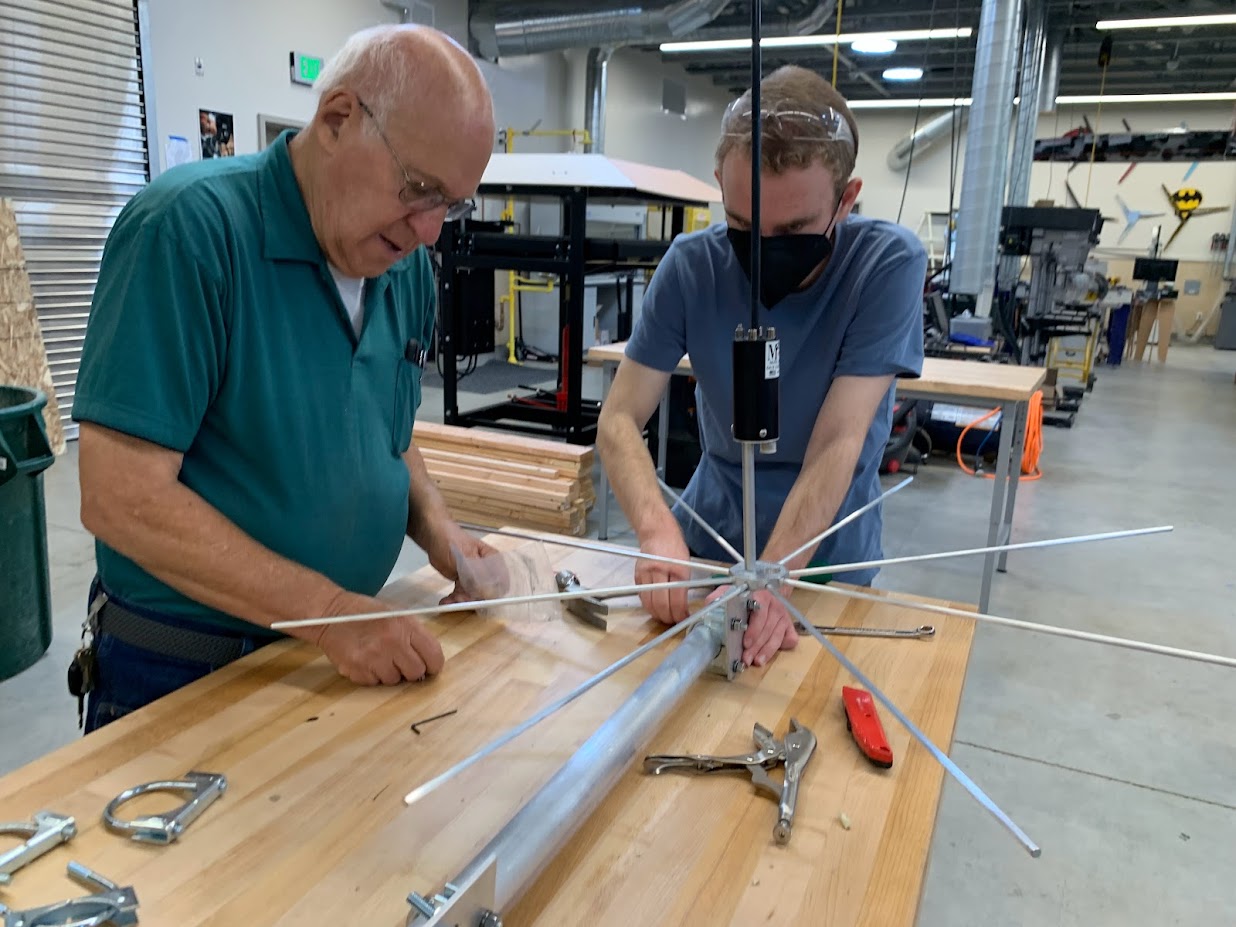
As a bonus to our GETA students, we offer after school extracurricular club and leadership opportunities. On Mondays, Leadership, on Tuesdays, Solar Regatta, (A regional solar and battery powered boat racing competition sponsored by our local utility company-SMUD). On Wednesdays. Satellite and Rocketry activities (much more about this later) and on Thursdays (Hydrogen Powered RC racing- an international competition run by Horizon Educational call the H2GP- Hydrogen Grand Prix).
Two years ago, we were challenged to bring satellite technology into our curriculum. I did not know the first thing about satellites, but energy propagation, energy management, energy conversions, and energy storage all seemed to be a perfect fit into what we already did, so we accepted the challenge.
Back in 2003-2006, my AP Physics students launched rockets with Amateur Rocketry Clubs in the TARC (Team America Rocketry Challenge) and with NASA in the SLI (Student Launch Initiative), and in that season, we met Bob Twiggs. Bob was a Stanford professor who invented the CubeSat and used it as a platform to teach satellite basics to his Stanford grad students. So, with the challenge in front of us, we reached out to Bob, and he was excited to hear from us. It had been nearly 17 years. He explained that he had retired and started his own educational company (Twiggs Space Lab) specializing in STEM modules that took students from simple soldering and circuitry on up to their first micro satellite (CanSat, CubeSat, PicoSat, QB2 PocketCube). During that phone call, Bob asked if we would be interested in being a BETA school for his STEM modules. We said “YES!” immediately.
As we worked though and documented our experiences with the Jiggy Bot, the CricketSat and the AlphaSat modules, we soon realized that we were going to need to the ability to transmit to these devices, not just receive. This brought us to the Amateur Radio community. We reached out to various clubs in the area (Sierra Foothills ARC, Elk Grove ARC, River City ARC, Lodi ARC, Stockton Delta ARC). In this season we met some very helpful Elmers (Dave- KK6MVJ, Jojo-KN6HTD, Nelson-K6VDU, John-NZ6Q, and many others) The lead teacher, the author of this article, and a student received their Technician licenses early, and then… an ARRL grant opportunity opened for us. In writing the grant, we proposed funds for our own HAM Shack, the necessary antennas to track and communicate with satellites and the ISS, funds to support the teaching and Technical Level licensing of our students and a chunk to support a launch of our eventual pico-satellite in association with the NREP Initiative (NanoRacks External Platform) aboard the ISS. Matt Craft and Bob Twiggs of Twiggs Space Lab have been helping us move in this direction.
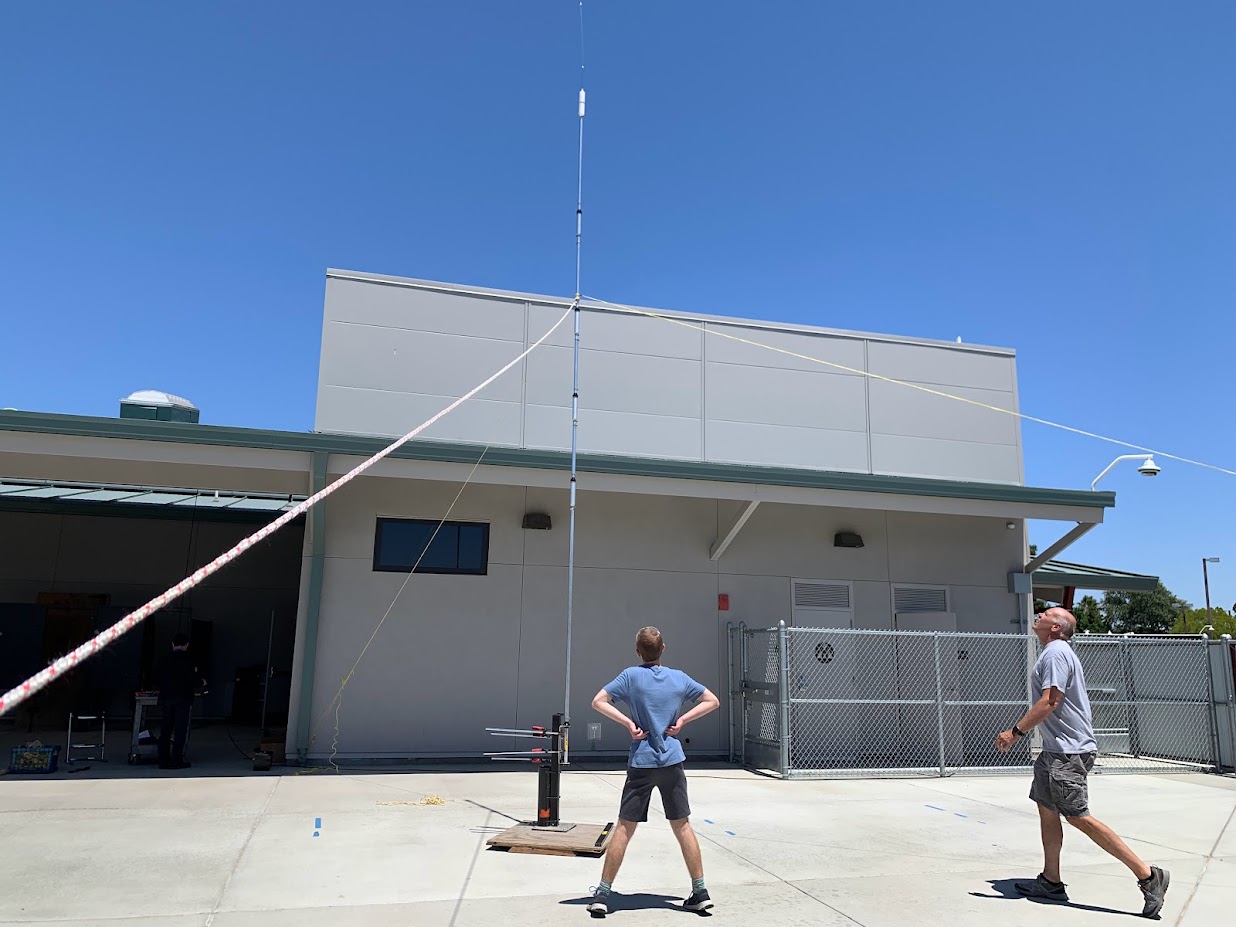
We were awarded the grant and off to the Ham Radio Outlet (HRO) we went. We set up our Ham Shack and antennas, purchased the study materials and studied and reviewed a little from meeting to meeting. Unfortunately, because our students are so involved in other activities on campus, very little studying was done between meetings, so we reached out to John-NZ6Q of the Stockton Delta ARC to see if he would be willing to host a HamCram, and he said ‘yes’. In addition to the Satellite and Rocketry Club members, I opened up the HamCram opportunity to other GETA students. On the day of the HamCram, twenty-four students showed up and twenty passed the exam on December 2, 2023. The four who didn’t pass, had to leave early, challenged the exam, and the test won. Otherwise, those who stayed to the end had a 100% pass rate. Thank You John!!
Since that day, other contacts have been made. Most notably David-WB6TOU, who does research with pico balloons. David came by on December 7th to speak with a handful of our students concerning opportunities in space weather research and WSPRnet technology (Weak Signal Propagation Reporter).
As of the writing of this article, final exams are underway, so decisions for the pico-balloon opportunity have yet to be discussed or made. This opportunity is incredible. What you don’t know is that the GETA program already has an international footprint all around the globe with their solar suitcase program. The GETA sophomores learn solar technology using the solar suitcase as the learning platform and then, because grants are used to fund these units, they are sent to energy poor nations, villages and families with contacts we have with humanitarian and faith-based organizations. To date we have 175 of these solar suitcases in 27 nations and 10 more will be going to Uganda in January 2024. This footprint might-well be extended into space if the students decide to pursue the pico-balloon opportunity and push towards the NREP program.
Discover more from Lodi Amateur Radio Club
Subscribe to get the latest posts sent to your email.

 Lodi Amateur Radio Club